Toyota Expands Residual Value Financing in Thailand to Compete With Chinese EVs


Toyota Motor has introduced a vehicle financing scheme across Thailand to lower monthly payments and compete with cheaper Chinese electric vehicles. The programme, known as zankure in Japan, allows buyers to pay for a vehicle based on its purchase price minus its estimated future value.
Under the scheme, Toyota sets a vehicle’s residual value at the end of a three- to five-year contract. Buyers then pay the remaining amount through monthly instalments, which can be lower than those under conventional vehicle loans.
For example, a five-year contract with a 30% residual value and 4% interest can reduce monthly payments by around 30%. At the end of the contract, buyers can return the vehicle, trade it in or purchase it by paying the remaining residual value.
Toyota launched the programme in Thailand in August, making it available through nearly all its dealerships nationwide. While similar financing products already exist in markets such as Singapore and Malaysia, Thailand is the first Southeast Asian market where Toyota has rolled out the scheme on a large scale.
Addressing Resale Values and Ownership Costs
Thai consumers have traditionally preferred buying vehicles outright and keeping them for extended periods. However, instalment payments for products such as motorcycles and household appliances have become more common.
Toyota’s scheme also aims to address uncertainty surrounding used-car prices. Private vehicle transactions remain widespread in Thailand, making resale values harder to establish. Setting a residual value at the start of a financing contract gives buyers a clearer indication of their vehicle’s future value.
The programme also supports Toyota’s plans to grow revenue beyond new-vehicle sales. The company aims to increase revenue from value chain businesses by 40% to JPY 3 trillion (US$18.9 billion) by financial year 2030. Used-car sales and financial services are among its key areas of focus.
Chinese EVs Gain Ground in Thailand
Toyota’s financing push comes as Chinese automakers gain a larger share of Thailand’s vehicle market. According to the supplied figures, passenger vehicle sales rose 15% year on year between January and June, with EVs accounting for 31% of sales. That represented an increase of around 14 percentage points from the same period a year earlier.
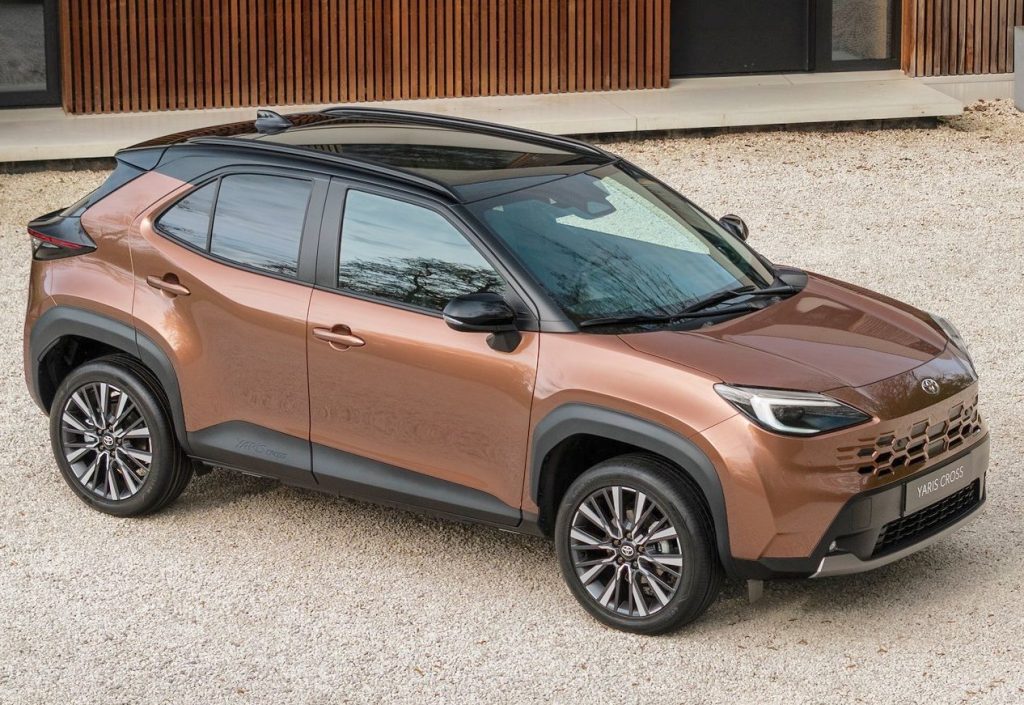
Government subsidies and an influx of Chinese-made vehicles have contributed to the growth. BYD, for example, sells the Atto 3 electric SUV in Thailand for around THB670,000 (US$19,980). This is approximately 20% less than the Toyota Yaris Cross, priced at around THB820,000.
Data from the Japan External Trade Organisation shows Chinese automakers reached a 26% share of Thailand’s registered vehicle market in 2026. Their share increased by around 20 percentage points compared with 2021. Japanese brands collectively held 64%, down around 21 percentage points over the same period.
Other Japanese manufacturers are also adjusting their regional operations. Suzuki announced plans to end local production in Thailand in 2024, while Honda consolidated its two assembly plants. Nissan has also ended production at one of its two Thai plants.
Toyota’s residual value financing scheme offers another way to compete as buyers consider both vehicle prices and monthly ownership costs.