

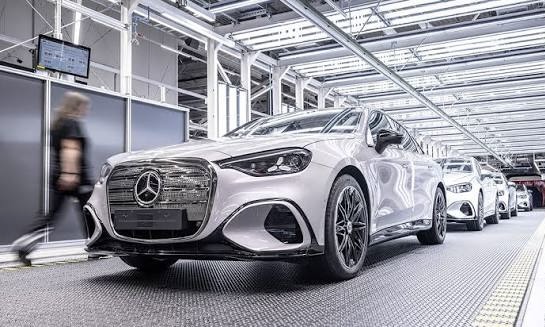
Mercedes-Benz could close two production facilities in Germany if the company is unable to reduce operating costs, according to its Head of Production, Michael Schiebe.
Speaking at an employee meeting in Sindelfingen near Stuttgart on Monday, Schiebe said the company’s stated goal remains to keep all of its production sites in Germany. However, he said measures to reduce costs would be required to maintain the current network of facilities.
If the required cost reductions cannot be achieved, Mercedes-Benz could close one body shop and one powertrain plant in Germany.
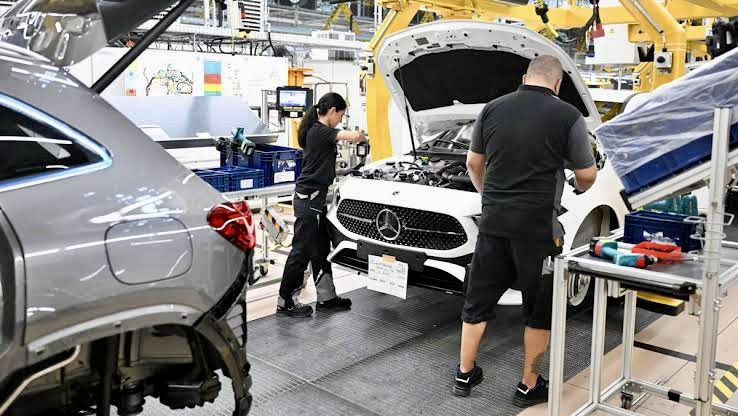
A body shop is involved in vehicle production, while powertrain plants manufacture components and systems used in vehicles. Mercedes-Benz currently operates body shop facilities in Sindelfingen, Rastatt and Bremen.
Its powertrain production network in Germany includes facilities in Untertürkheim, Affalterbach, Berlin, Hamburg, Kamenz, Kölleda and Arnstadt.
The company has not identified which specific body shop or powertrain facility could be affected by a potential closure.
The comments were made as employees and trade unions protested against job cuts and cost-reduction measures across Germany’s automotive industry. According to IG Metall, Germany’s largest industrial union, around 175,000 employees participated in rallies at 280 locations on Monday.
Demonstrations were held in several major automotive centres, including Stuttgart, Wolfsburg, Ingolstadt and Munich.
Mercedes-Benz has also introduced what it calls a productivity campaign for Germany as part of its efforts to reduce costs at its domestic operations.
The company’s management board has proposed measures that include longer working hours without additional pay. The proposal has contributed to wider discussions between employers, employees and trade unions over labour costs and working conditions in Germany’s automotive sector.
For Mercedes-Benz, the potential closure of production facilities is linked to whether sufficient cost reductions can be agreed upon. The company has not announced that any specific plant will be closed.
The potential changes form part of wider cost-cutting efforts by German carmakers as the country’s automotive industry faces pressure over production costs and competitiveness.
At present, Mercedes-Benz has stated that maintaining its German production sites remains the company’s objective, with the future of the facilities dependent on the outcome of discussions over cost-reduction measures.