
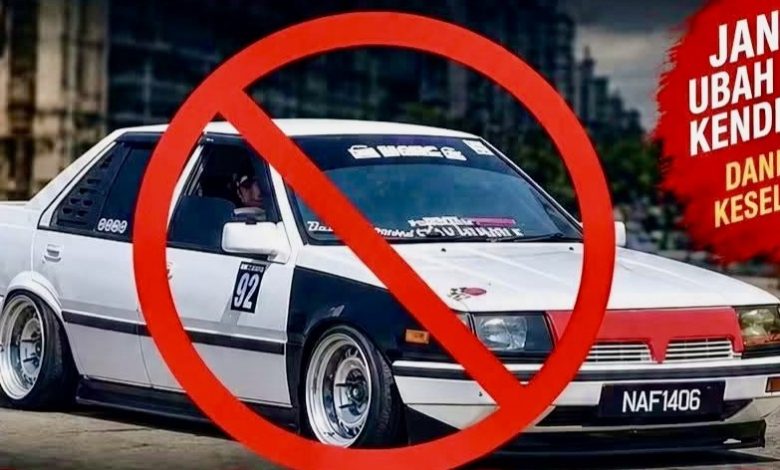
Malaysia’s tuned car scene has always been quite active, from lowered cars and aftermarket wheels to suspension upgrades and other performance parts. But vehicle modifications also come with rules, and recent attention on modified cars has left some owners concerned about what they can and cannot legally change.
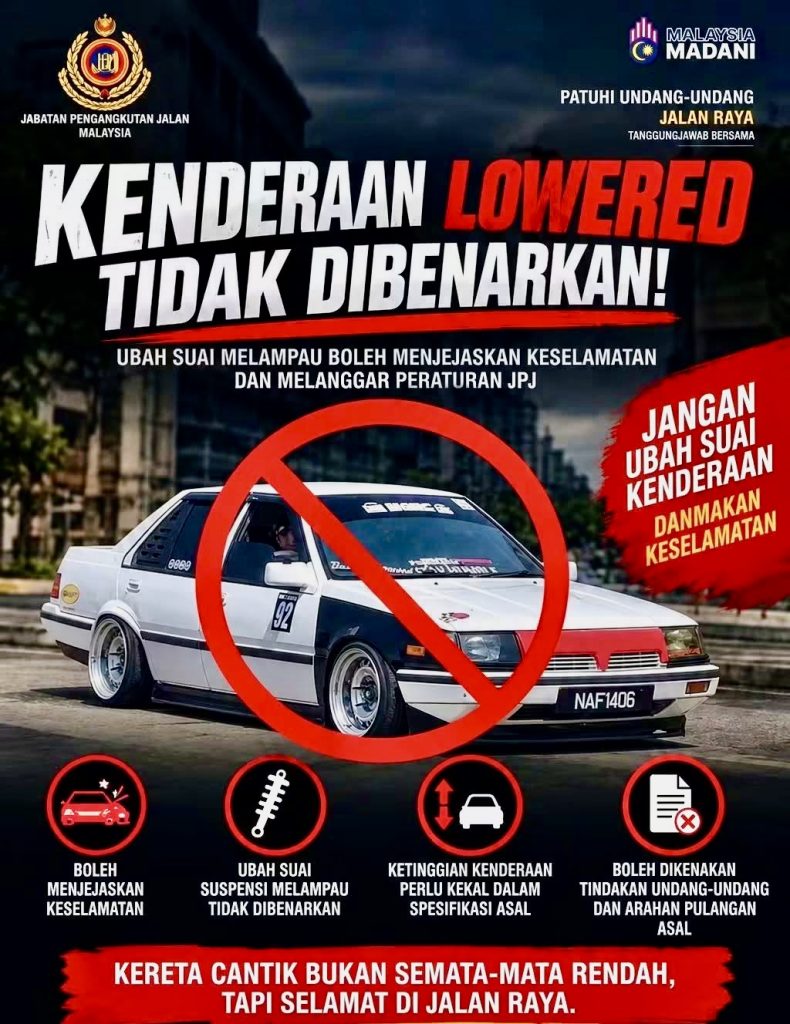
JPJ’s own modification guide says the permitted modifications mainly cover minor changes or accessories that do not change the vehicle’s identity or affect its safety features. Section 12 of the Road Transport Act 1987 also covers requirements for vehicle modifications before and after registration.

What Counts as a Problem?
For tuned car owners, suspension and wheel fitment are some of the main areas that can cause problems.
Lowering a car, changing suspension components or making other technical modifications can potentially affect the vehicle’s original specifications. JPJ also has procedures for different types of vehicle modifications and lists recognised engineering workshops that can carry out certain technical modification work.
This is where things can get confusing for enthusiasts. A modification may be common in the aftermarket, but that does not automatically mean it is approved for road use.
Wheel fitment is another area owners need to consider. Changes that affect the vehicle’s dimensions, steering or other safety-related areas can become an issue, especially if the modification goes beyond what is allowed under the relevant requirements.
Why Owners Are Frustrated
A major concern is the amount of money that can go into a modified car. A proper suspension setup, wheels, tyres and other parts can easily cost thousands of MYR. Owners who have spent heavily on their cars may not be happy if they later have to remove or change those parts to meet regulatory requirements.
There is also an argument from enthusiasts that not every modified car is necessarily unsafe. Some owners use established aftermarket brands and have their cars professionally installed and maintained.
At the same time, JPJ’s position is based around ensuring vehicles remain compliant with technical and safety requirements. Its published guidance specifically says modifications should not interfere with safety features, while certain technical changes require approval.
Could Malaysia Have a Clearer System?
One thing that could help both sides is clearer information on what modifications are allowed.
A more detailed system could give owners specific limits for things such as suspension changes, wheel fitment and other aftermarket equipment. This would make it easier for enthusiasts and workshops to know what can legally be fitted before spending money.
JPJ already has recognised engineering workshops for technical vehicle modifications, showing that there are existing processes for approved modifications.
For Malaysia’s tuned car community, clearer rules could make things easier. Owners would know where the line is, while enforcement could focus more clearly on vehicles that actually fail the required safety and technical standards.