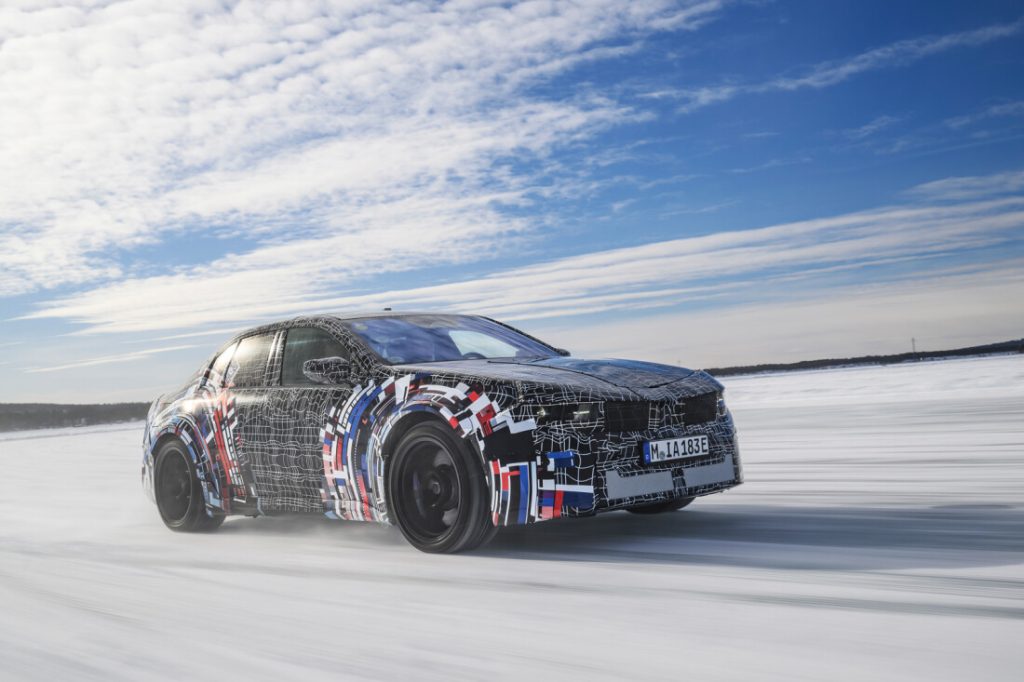

BMW’s new i3 has certainly brought some serious competition to the other EV with 3 in its Model name.
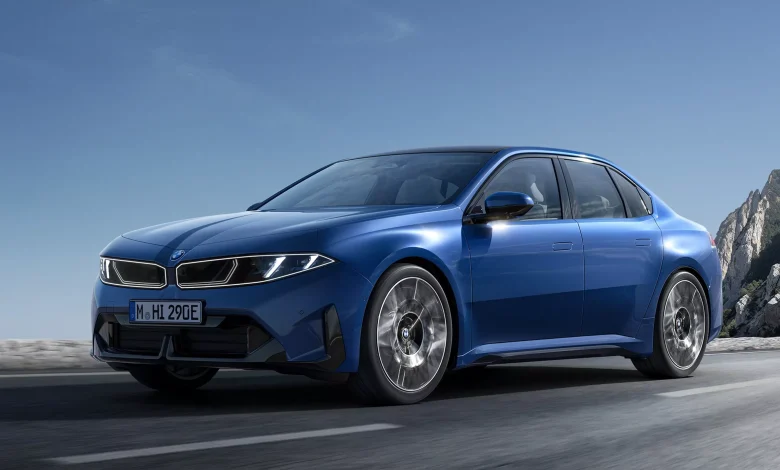
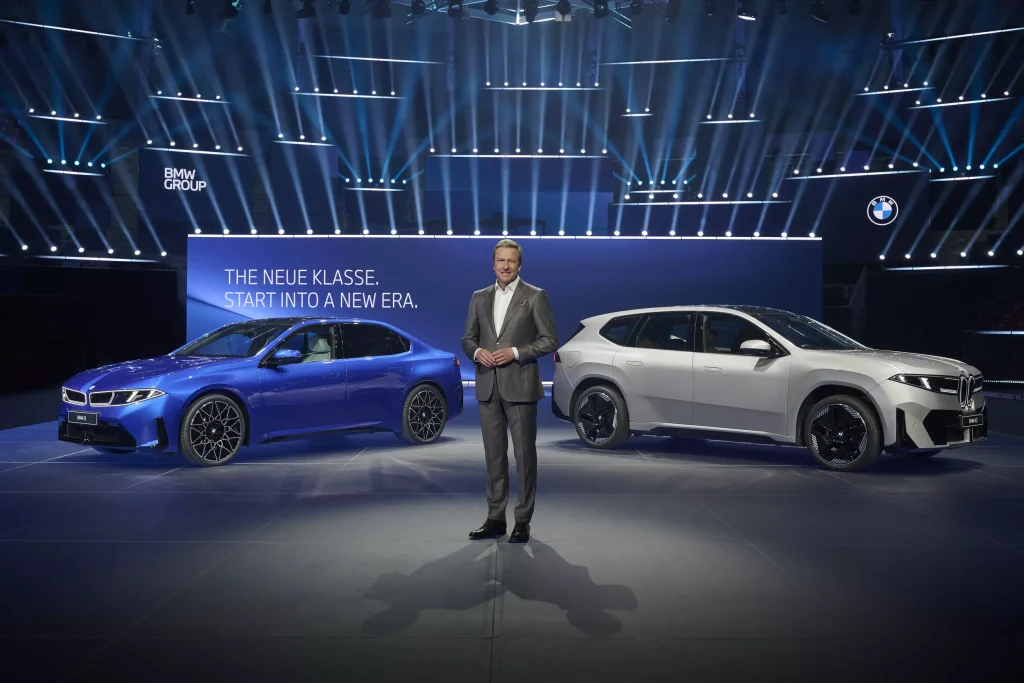
While the 3 Series is perhaps one of BMW’s most important nameplates, the Bavarian brand has nevertheless given it a serious electric rethink with the launch of its all-new i3. Arriving as the second model to emerge from its Neue Klasse era after the iX3 SUV, this latest e-sedan from Munich comes armed with some serious ammo to give the other EV with a “3” in its name a proper run for its money.
And perhaps the biggest headline-grabber of them all is BMW quoting a staggering WLTP range of up to 900 km for this i3, making it one of the longest-range EVs currently on sale. The key contributor to this rather impressive figure comes by way of a positively massive 108 kWh nickel-manganese-cobalt battery pack, which is further enhanced with improved energy density thanks to new cylindrical cell technology.
There is more to the battery than just it being big as well, as the all-new 800-volt Gen6 architecture brings some serious gains in the charging department. The i3 supports up to 400 kW DC fast charging, allowing roughly 400 km of range to be added in just 10 minutes under ideal conditions, while AC charging tops out at 22 kW.
Now as for what those batteries feed, the i3 will be offered in 50 xDrive guise at launch, which features a dual-motor setup with an electrically excited synchronous motor at the rear and an asynchronous motor up front. Combined output stands at a rather healthy 463 bhp and 645 Nm of torque, which is enough to propel this rather lardy 2.3-tonne saloon from 0-100 km/h in approximately four seconds.
And though it may have swapped fuel for cells, this should still very much handle like a proper 3 Series. The i3 benefits from a revised suspension setup compared to its SUV sibling, with softer springs, recalibrated bushings and specific anti-roll bars aimed at reducing yaw and roll inertia. Add in a five-link rear axle, stroke-dependent dampers and optional adaptive M suspension, and the fundamentals are still certainly there for it to be a rather tidy handler.
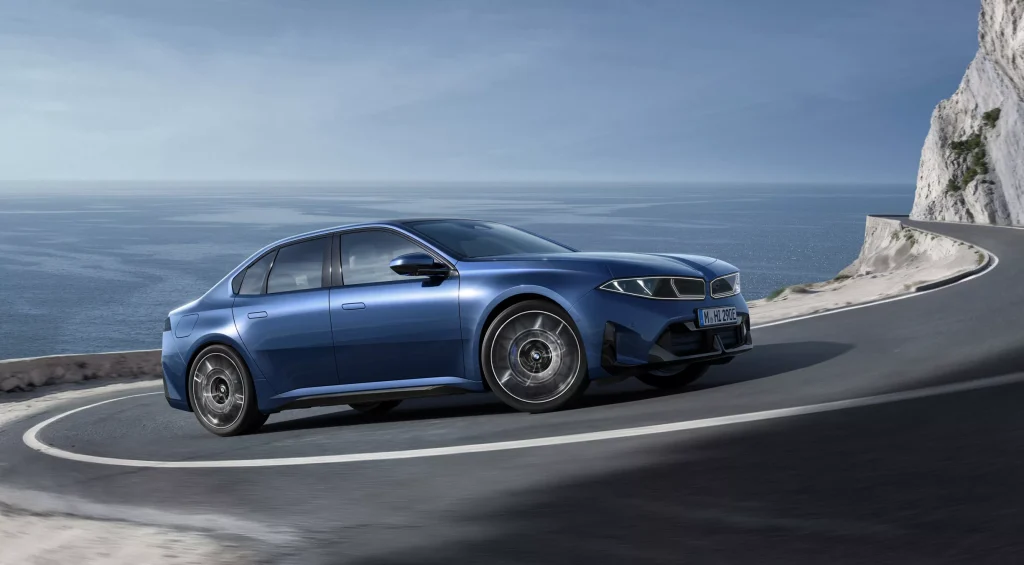
BMW has also been making plenty of noise about its new ‘Heart of Joy’ control system, which essentially is one of its four centralised computers that integrates control of the steering, brakes and motors. This rather novel box of bits is touted to operate up to ten times quicker than the systems that came before, thereby enabling more precise and more natural handling responses on the move.
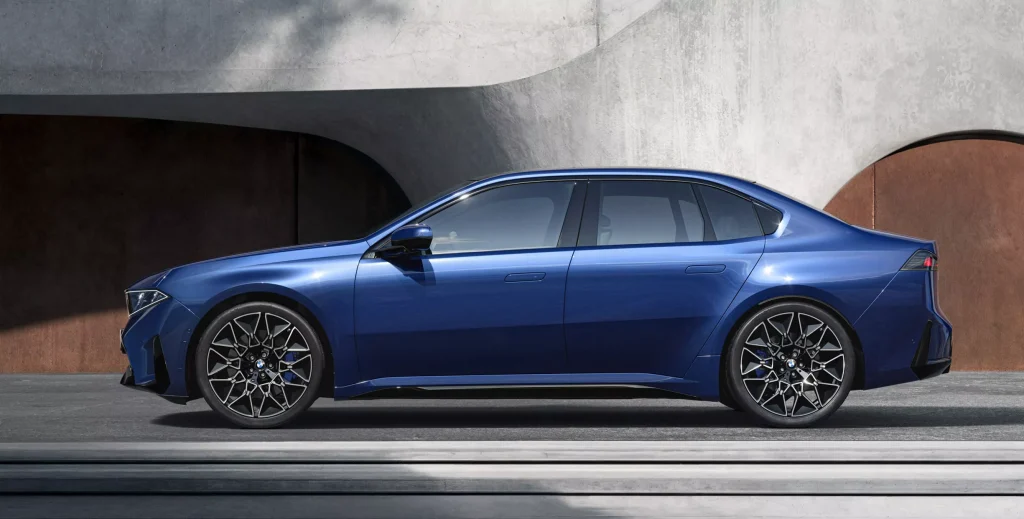
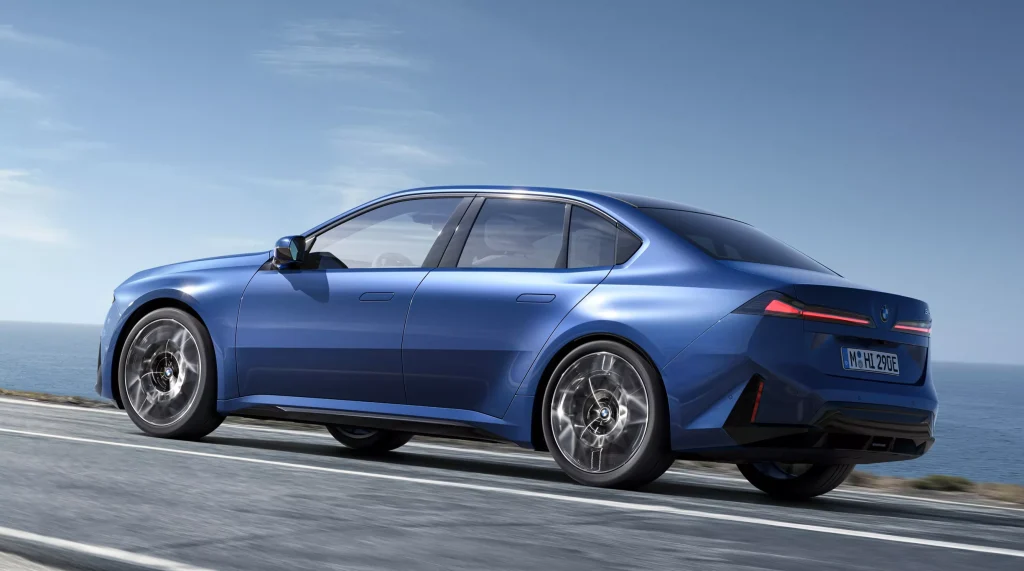
And conveniently moving along to the outside now, the i3 measures 4,760 mm long, 1,865 mm wide and 1,480 mm tall, making it 47 mm longer, 38 mm wider and 40 mm taller than the outgoing petrol model, while its 2,897 mm wheelbase is also stretched by 46 mm. Interestingly though, thanks to its short bonnet proportions, it doesn’t actually look all that much bigger at a glance.
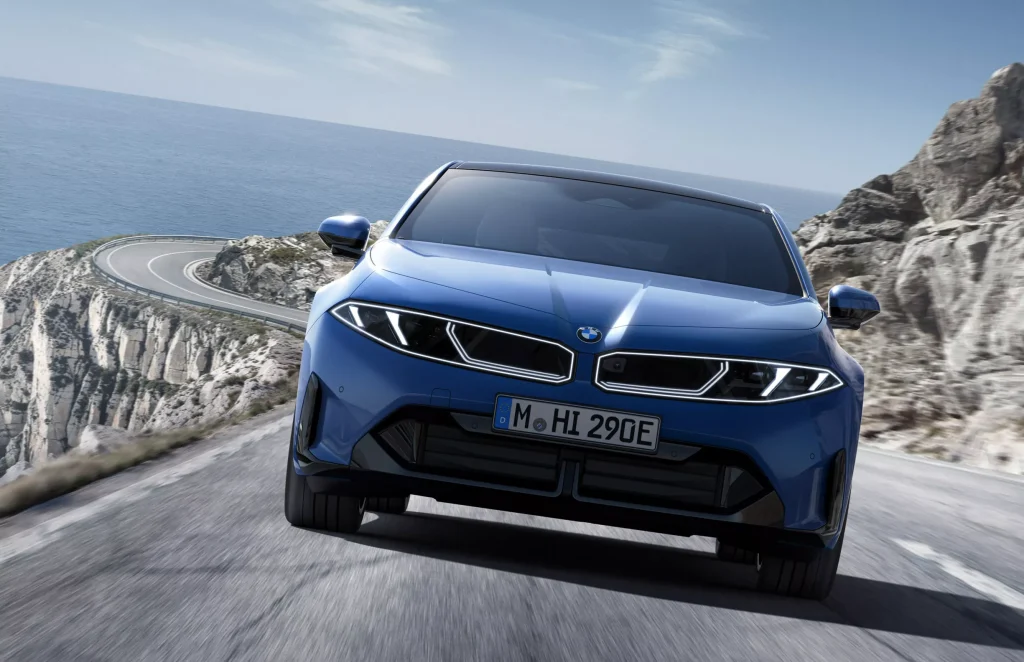
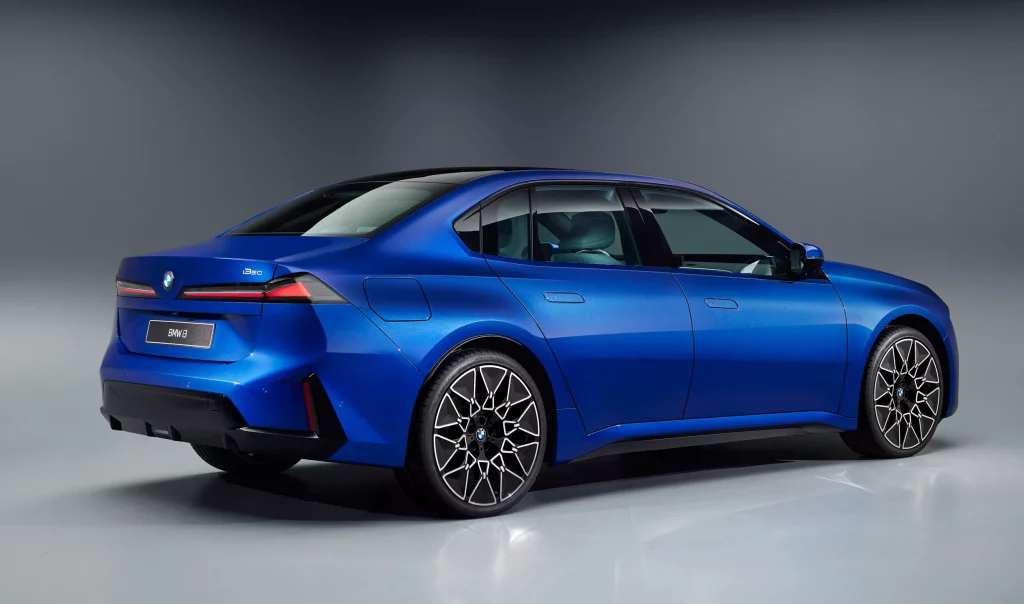
While on the topic of aesthetics too, it would not quite be a modern BMW without some controversy surrounding its design. The general proportions are by-and-large 3 Series, but new elements like the shark nose front end, slim lighting signatures and flush door handles have already attracted their fair share of mixed reactions.
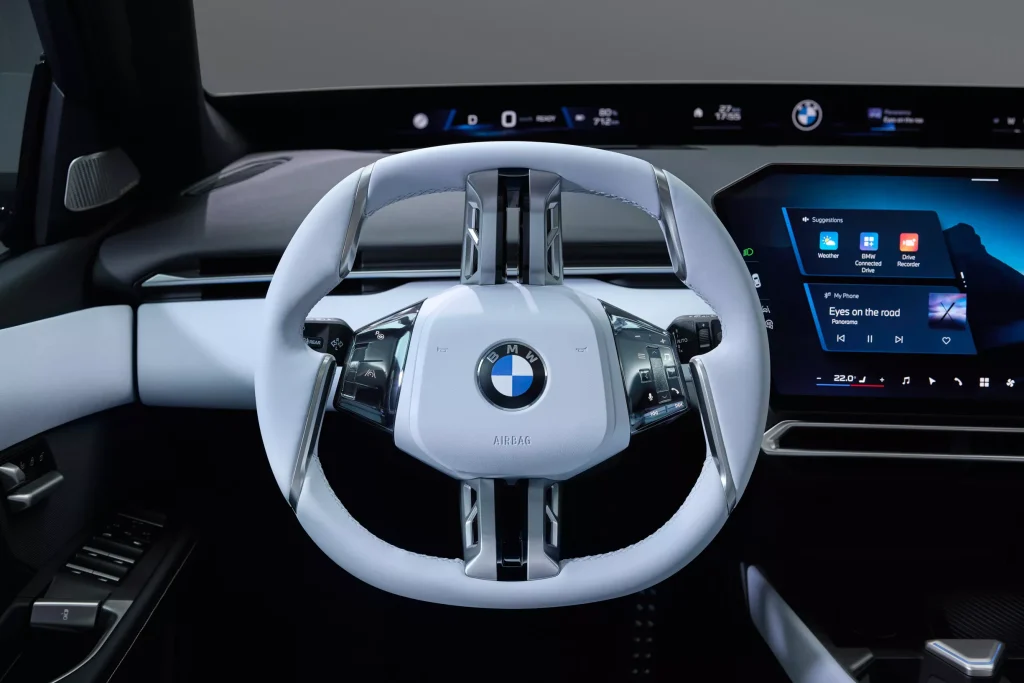
And while the future-forward exterior may divide opinion, it is the interior where BMW has really gone full futuristic. For what is supposedly the ultimate driving machine, the i3 does away with a traditional instrument cluster entirely. In its place sits a full-width Panoramic iDrive display stretching across the base of the windscreen, complemented by a 17.9-inch ‘Free Cut’ central touchscreen running BMW’s latest Operating System X, with most functions (unfortunately) now also controlled digitally.
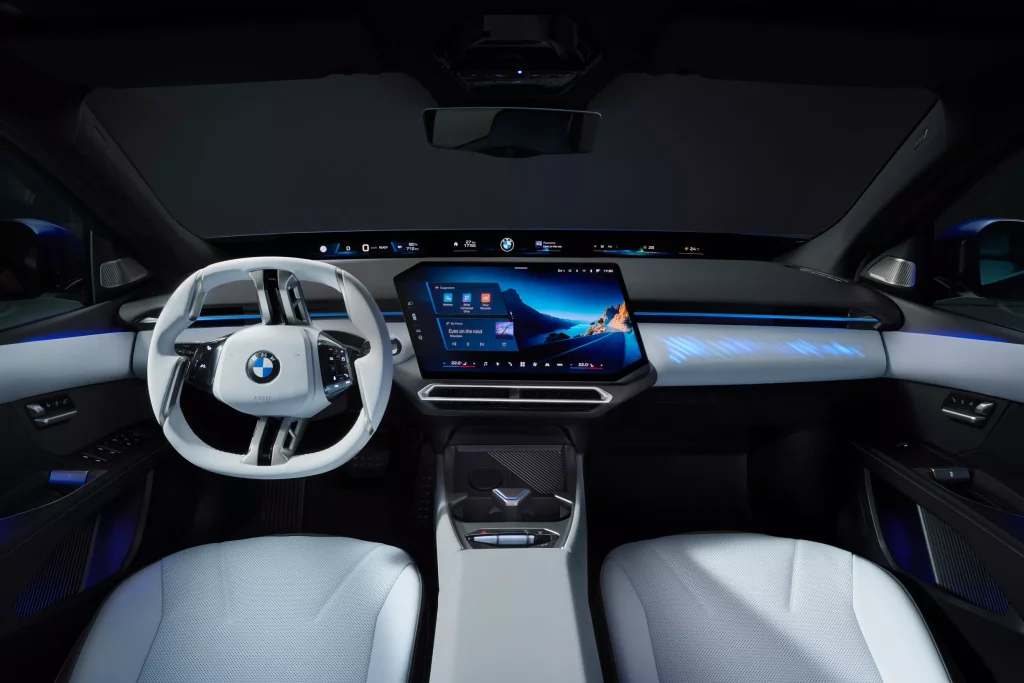
Adding further to the unconventional cabin layout is a redesigned steering wheel that now features spokes at both the 12 and 6 o’clock positions. Though to claw back some practicality points, there’s also a Qi2 wireless charger, an optional 3D head-up display, and a new generation of the “Hey BMW” assistant enhanced with AI capabilities via Amazon Alexa+.
In terms of positioning, the i3 arrives ahead of key rivals, beating the upcoming electric Mercedes-Benz C-Class to market, while Audi’s A4 e-tron is still a few years away. BMW will also continue to offer an updated combustion-powered 3 Series alongside it, albeit heavily revised to visually and technologically align with this new electric direction.
Looking further ahead, the i3 line-up is set to expand with additional variants, including single-motor options and a Touring estate. And of course, it would be remiss not to mention the upcoming quad-motor electric M3, which is rumoured to arrive later in the decade and could take performance to an entirely new level.