

A comprehensive breakdown on what you need to know and do… in order to seal that deal.
Now that you’ve set your sights on the car you want, it is time to reel it in and bring this baby home. But before that happens, we need to talk about the one thing that makes all that possible: money.
The Real Cost Of The Car
Let’s begin with the basics. That very attractive price you see listed in the ad? That’s usually just the harga kereta, or the bare car price, without any of the extras.
So before you get too excited, always be sure to ask the seller what the on-the-road (OTR) cost will be. This is the total amount you will need to part with before you can legally drive the car off the lot, and it typically includes:
- Processing fee
- Road tax
- Insurance
- Ownership transfer fees
Now all this could tack on at least a few thousand to what the sticker price on the car originally was. So just keep in mind from here on then that the final chunk of change you end up forking out will be significantly higher than what was initially advertised.
Also worth bearing in mind too that some sellers have one price for those paying in cash, and a slightly higher one for buyers opting for financing.
And without wanting to play into the stereotype of the sleazy used car salespeople, it is always best to ask for a written breakdown of all costs upfront. Some may conveniently gloss over certain fees until payment time, so getting everything clarified from the start is the best way to avoid any nasty surprises later on.
The Insurance NCD Shuffle
If you already have another car in your name, do take note that the No Claims Discount (NCD) — the discount applied to your insurance premium for not making claims — is only applicable to one vehicle in your name at a time.
The good news however is that an NCD can be transferred between cars, even mid-policy. So if your new purchase is the more valuable one, it is worth transferring the NCD over to save on premiums. You will usually have to top up the premium difference on the original car, but the overall savings can be worth the hassle.
Just speak to your insurer or agent about the NCD transfer process. It is fairly straightforward and they’ll handle most of the paperwork. Most used car dealers are also more than happy to handle the NCD transfer on your behalf, though naturally with a chargeable processing fee.
The Art of the Deal
Having confirmed the real cost of the car, you might naturally want to negotiate it down a bit.
And leads to what is arguably the most exciting (or most dreaded) part of the car-buying process: haggling.
Like any art form, negotiation style is rather personal. Some people thrive in the back-and-forth of bargaining; others would rather pay full price just to avoid the awkwardness. But whatever your style, here are a few universal tips to help you get the best deal:
- Point out any flaws or wear-and-tear on the car to help push the price lower. Scratches, tyre condition, uneven paint, minor dents can all help drive that price down.
- Be confident and hold your ground, but don’t be rude. Confidence helps, but there’s no need to be aggressive. Courtesy often gets you further than aggression.
- Don’t be afraid to walk away. There will always be other cars out there.
Top Tip: Dealers will often throw in “freebies” like a service voucher, tinting vouchers, or a car wash to sweeten the deal. Just remember though that you can always reject these in exchange for a better cash price. Besides, you’d rather get your tinting or detailing done at your own preferred workshop anyway.
Financing
Unless you’re paying in full with cash, chances are you’ll be looking at financing options to fund your soon-to-be chariot. And though without turning this into a personal finance seminar (though the golden rule is still: never buy what you can’t comfortably afford), here are a few points to keep in mind when financing a used car:
- Down payment: The general guideline is at least 10% of the car’s agreed value, though 100% loans do exist. Whether you qualify depends on your credit profile and the bank’s risk appetite.
- Loan tenure: Under Bank Negara rules, car loans can stretch up to 9 years for new vehicles. For used cars, however, tenure often drops depending on age. Many banks won’t finance cars over 10 years old, and those that do may limit you to 5 years or less.
- Interest rates: For new cars, rates can go as low as 2.x% per annum, but for used cars expect rates of around 3.5% to 5.0%. Rates vary depending on the bank, the car’s age, your credit score, and sometimes even your employment type.
- Loan margin: The bank doesn’t always finance based on your agreed purchase price; they usually go by their own market valuation. If you’re paying above market value (say, for a rare model), you’ll likely need to top up the difference in cash.
Most dealers have panel banks and will handle the application for you, but it is still smart to get a competing quote from your own bank. In some cases, especially with long-standing customers, you might secure a better rate or fewer fees.
It’s also worth mentioning “loan kedai” is a thing, where the dealer could arrange an in-house financing option when banks reject an application. While it can get you behind the wheel faster, interest rates are typically higher, terms less flexible, and buyer protections weaker, so proceed with caution.

As is worth reiterating here too, most of the time buying in cash will afford a slightly cheaper overall purchase price than buying with a loan. Dealers save on processing costs, and many are willing to shave a bit off the asking price for a cash deal.
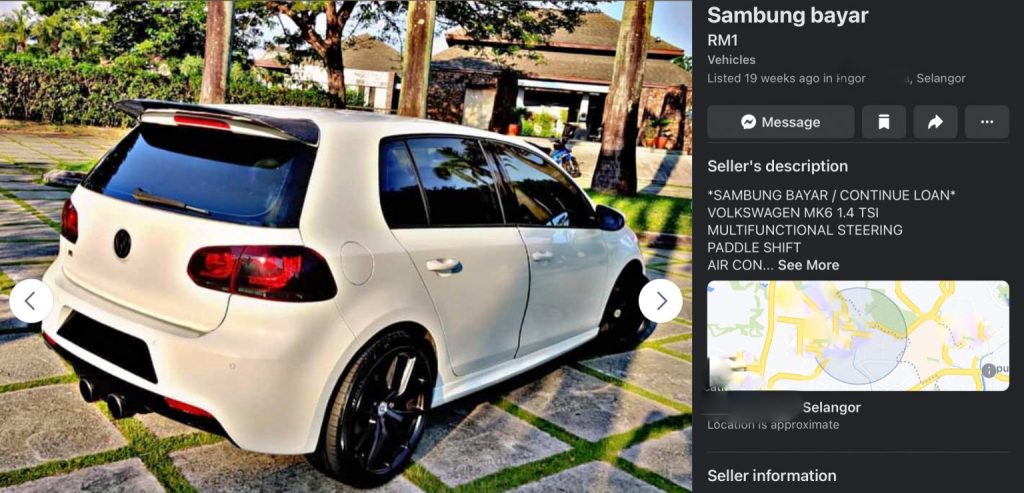
A quick word of caution as well since we’re on the subject of financing: you may stumble across suspiciously cheap online listings bearing the term Sambung Bayar. As the name suggests, this involves taking over the current owner’s loan in exchange for use of the car. This practice likely merits a whole deep article (with there in fact being a rather excellent one on DSF linked here), but the TL;DR is that:
- It is actually a lose-lose scenario for both the seller and buyer who engages in this scheme
- It is also technically an illegal practice
The Paperwork Process
Once both parties have agreed on the price, it’s time to get the paperwork sorted before you can officially drive off in your new (used) ride.
If you’re buying from a dealer, they’ll usually handle most of this for you as part of their processing fee. But if you’re buying directly from a private seller, you’ll likely need to take care of these steps yourself.
Here is what typically happens next:
- Puspakom Inspection: A mandatory check to confirm the car’s identity and roadworthiness before ownership transfer. This is also where the front windscreen and front side window tints are typically removed, if present.
- JPJ Ownership Transfer: This involves biometric thumbprint verification at a JPJ branch, or via the MySikap portal if the vehicle and seller qualify. Some dealers may offer in-house transfer services, but others will require you to complete this at JPJ yourself.
- Road Tax & Insurance: Both must be renewed under the new owner’s name and paid before the ownership change can be finalised. Only once that’s done are you legally allowed to drive the car away.