Rheinmetall Curb Charger Passes Cologne Trial With Over 99% Availability

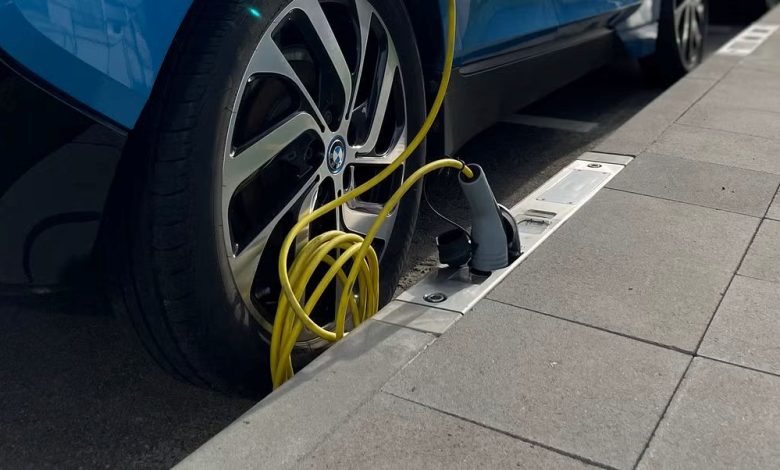
Rheinmetall has completed a field trial of its Curb Charger in Cologne, Germany, with the kerb-integrated EV charging system recording more than 2,800 successful charging sessions and over 99% technical availability.
The pilot project began in April 2024 at two locations in Cologne-Lindenthal, involving four charging points installed directly into road kerbs. The trial was conducted with the City of Cologne and TankE GmbH to assess the system’s reliability, practicality, urban integration and public acceptance over a period of around 12 months.
According to the published case study, the four charging points delivered more than 50 MWh of electricity throughout the trial. Each charging session supplied an average of around 19 kWh, equivalent to approximately 120 km of driving range. The charging points recorded an average of more than two successful sessions per day per unit.
The system’s technical availability of over 99% was supported by its modular design. Instead of replacing an entire charging station during maintenance, operators can replace the charging module housed inside the kerb. This approach is intended to reduce maintenance time and operating costs. Following the trial, all four charging points have entered regular operation.
User feedback was also positive. Around 100 participants completed questionnaires between August 2024 and March 2025, giving the Curb Charger an average score of 4.38 out of five. Participants, particularly those aged over 60, appreciated having a charging point nearby that was easy to use.
Unlike conventional charging stations, the Curb Charger is integrated into the kerb, helping save pavement space and preserve sightlines. Its design also reduces the need for protective bollards and lowers the risk of pedestrians tripping over charging cables. Drivers can access the charging socket from the street, with the system designed to support single-handed operation.
However, visibility was identified as an area for improvement. Rheinmetall noted that road markings and integration with navigation systems and charging apps could make the units easier to locate. Improvements to dirt deflection and lighting around the socket were also introduced during the trial to improve usability and resistance to environmental conditions.
The system is designed to help cities install public EV charging points in densely built-up areas where space is limited. Its modular construction also allows operators to install prepared kerbs, known as hollow kerbs, before adding charging modules when demand increases.
With the pilot project completed successfully, Rheinmetall’s Curb Charger is now available as a series-production product, offering another option for expanding public EV charging infrastructure in urban areas.