
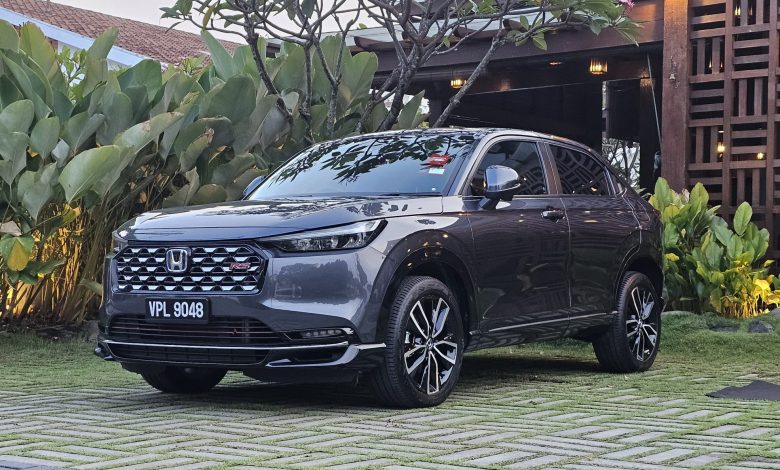
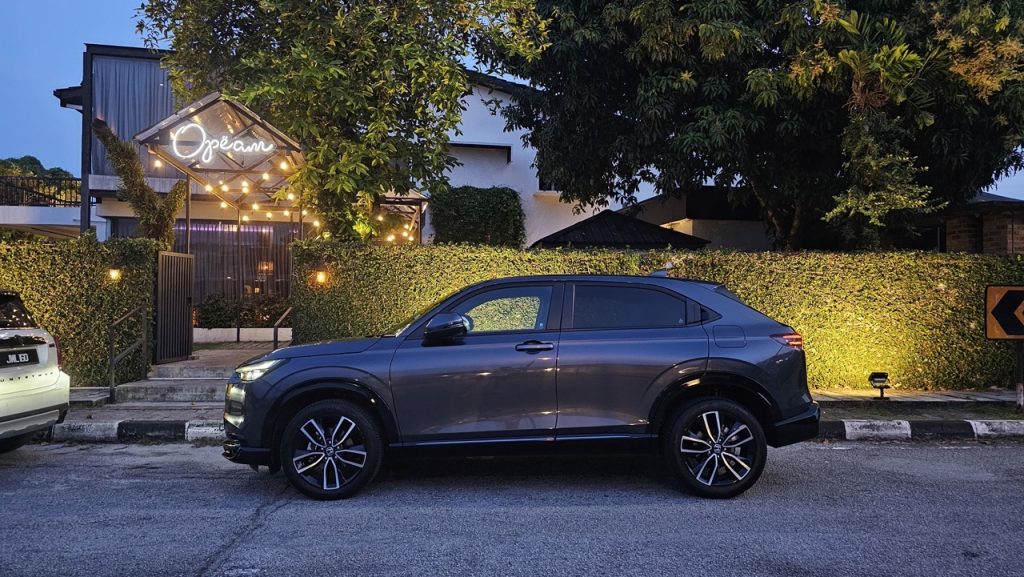
Here’s some of the smaller observations gathered after 600 km behind the wheel of Honda’s hybrid HR-V.
So a little while back, Honda very generously offered this writer the opportunity to spend a few days with the newly-facelifted HR-V e:HEV RS. Though describing it as “facelifted” may admittedly be the big H overselling things slightly here, as the mild titivation performed is (to put it kindly) sufficiently subtle that the full review previously written on its pre-facelift predecessor (linked here) remains largely relevant.
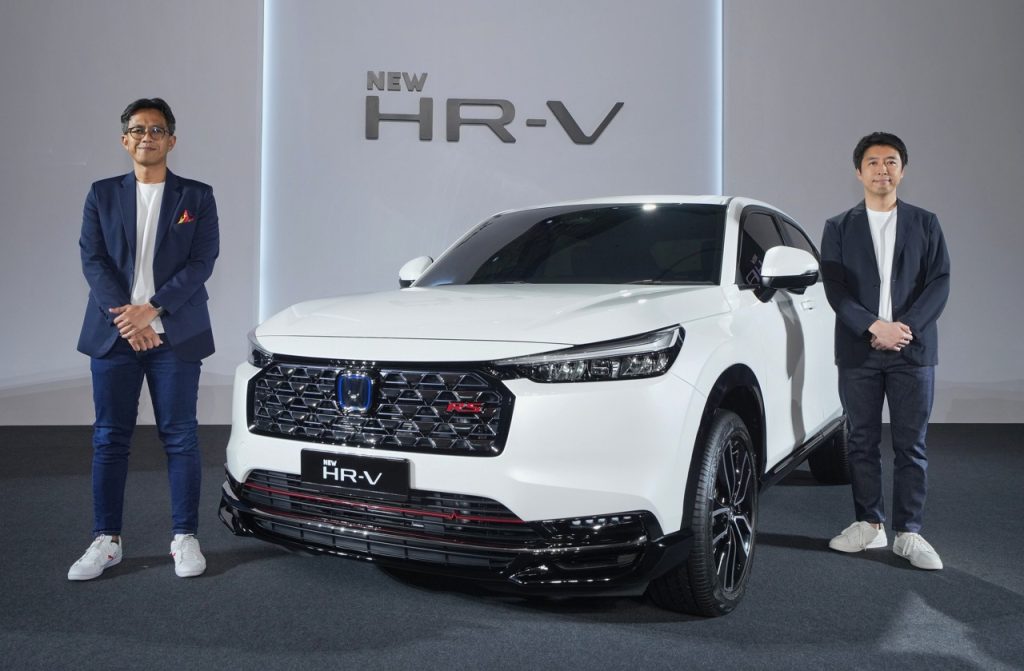
As it just so happened however, there was quite a fair bit of driving to be done during its time here, including a short trip up to Ipoh. So instead of rehashing another big-picture review, it seemed a bit more worthwhile to focus on some of the smaller day-to-day observations one tends to miss during a conventional road test. Not to mention paying a bit more attention to the fuel consumption of this hybrid SUV too, which has incidentally become a topic of greater interest (and no small amount of publicity for Honda) amid the current climate of rising fuel prices.
Trip Report 1: Petaling Jaya – Ipoh
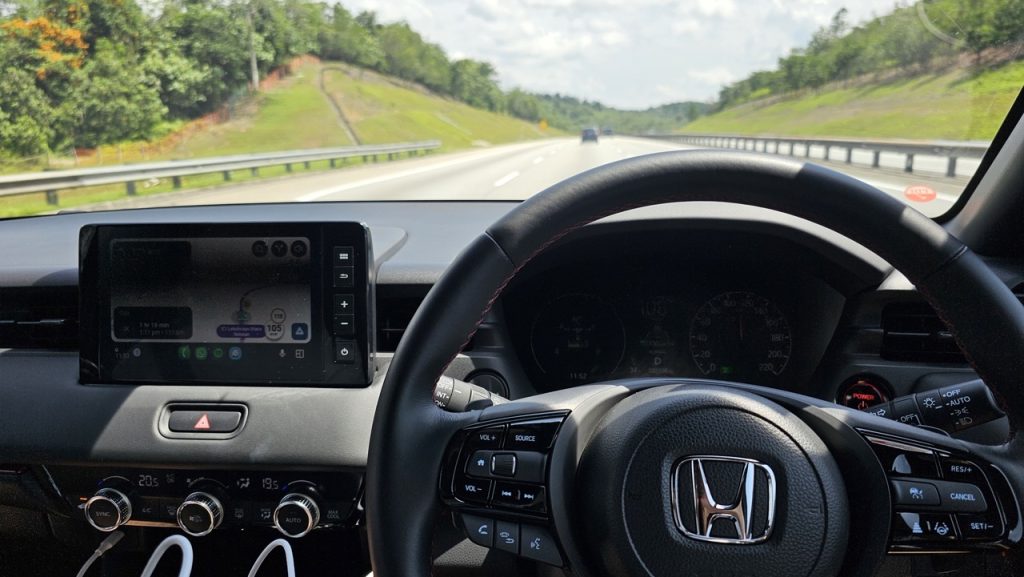
Driving Conditions: Steady highway cruising between 100-120 km/h, with traffic largely clear.
Economy: 5.9 l/100 km (16.9 km/l)
Driving Notes:
- Highway driving in the HR-V e:HEV was generally a pleasant experience. NVH levels in the cabin are relatively decent, while the eight-speaker sound system is more than adequate for a car in this price range. That said, a quieter set of tyres would certainly help reduce the somewhat pronounced road roar emitted by the stock Continental rubber.
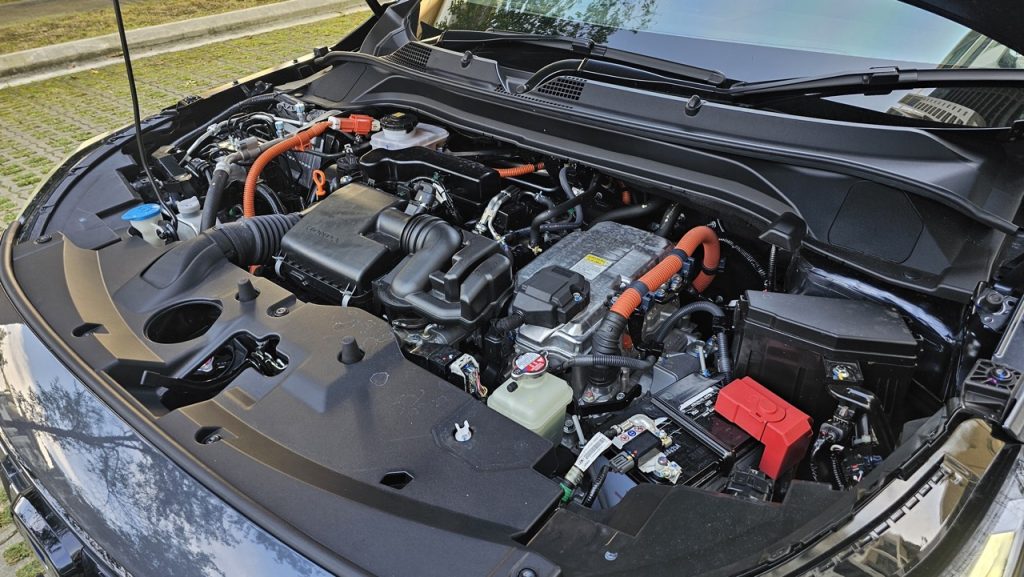
- As expected for this sort of highway run, the car spent most of its time relying on the petrol engine, with the electric motor stepping in to provide an extra shove during occasional overtakes. Even then though, there remains enough grunt from the naturally aspirated 1.5-litre to comfortably maintain average highway cruising speeds without electrical assistance, while still returning fairly respectable fuel economy.
- The HR-V’s adaptive cruise control system deserves a mention too. Its lane centring works rather well with minimal ping-ponging between lane markings, while the lane departure alerts are pleasantly non-invasive. The only thing perhaps for Honda to consider adding is an option to adjust the acceleration intensity while cruise control is active, as it can occasionally rush back up to the preset speed a little too eagerly once the road ahead clears.
Trip Report 2: Around Ipoh Town
Driving Conditions: Gentle driving in mainly stop-start traffic, with semi-long stretches (roughly 5-10 minutes at a time) of idling.
Economy: 7.0 l/100 km (14.3 km/l)
Driving Notes:
- Trundling around Ipoh old town meant the hybrid HR-V spent much of its time operating in EV mode, and it is here where the instant torque from the electric motor really shines. Moving off from junctions requires little effort, while darting into the occasional gap in traffic is a breeze, making town driving feel that bit smoother, more responsive and less stressful overall.
- Being a hybrid too, there is admittedly something rather satisfying about sitting in air-conditioned comfort while trying to figure out where the next makan stop should be, knowing that the engine is shut off for much of the time. That said, these longer stretches of idling where the battery is being depleted are perhaps the reason why fuel economy around town ended up slightly worse than on the highway…
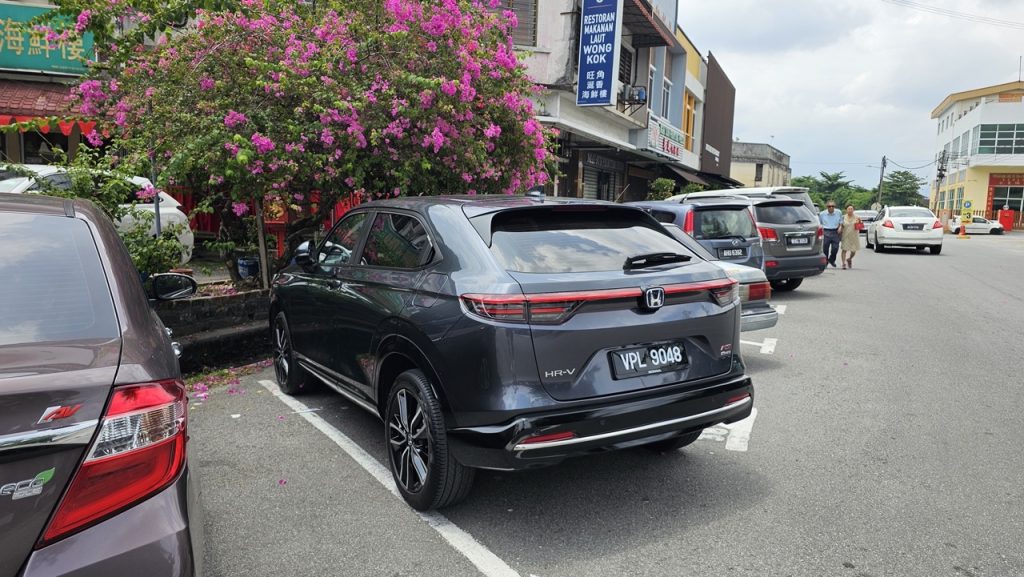
- More generally meanwhile, the HR-V remains a pleasant urban runabout. The high seating position offers good outward visibility, while the ride and handling balance is typically Honda-good. Slightly firm perhaps, but well damped and never uncomfortable.
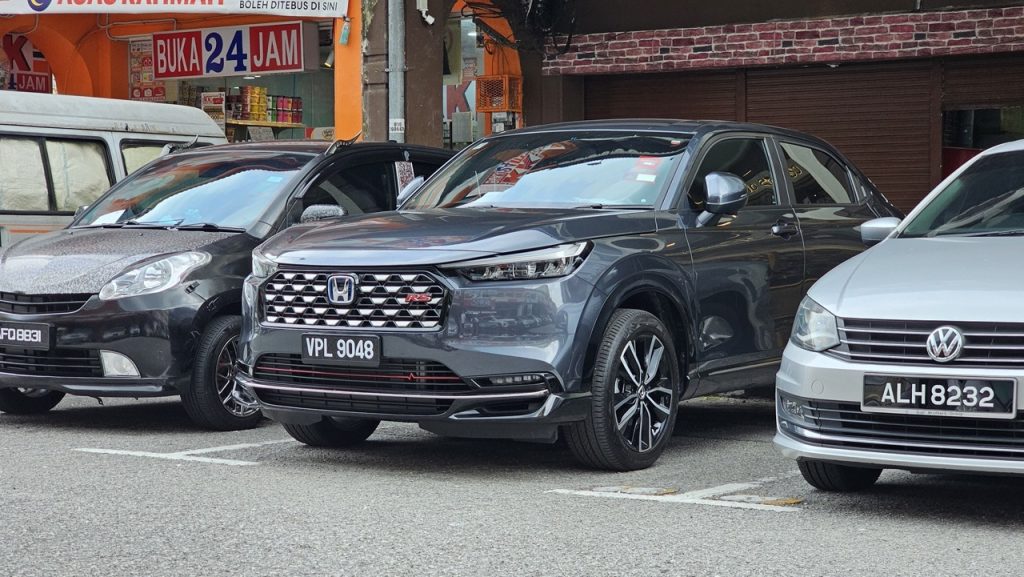
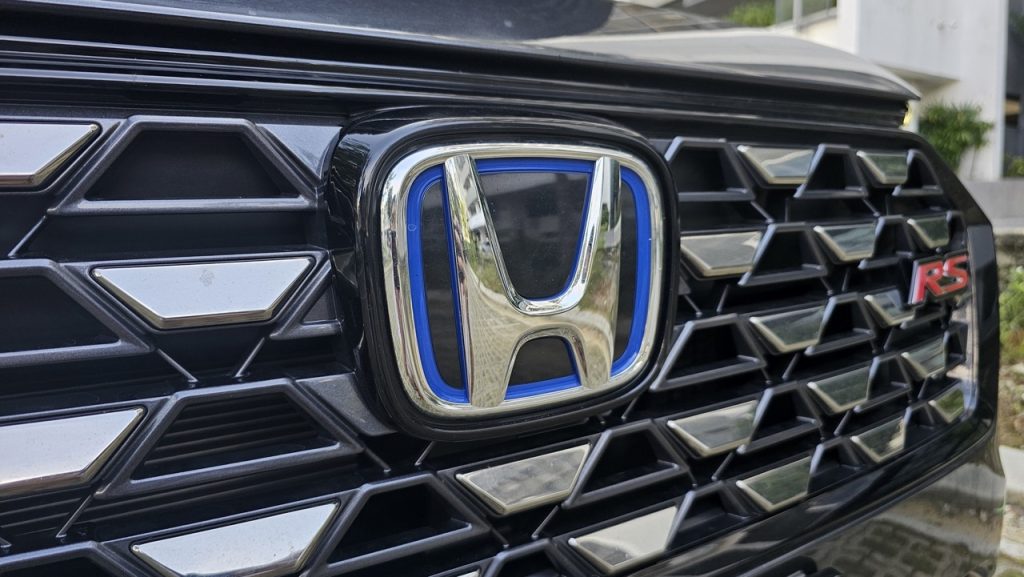
- A little P.S. here too regarding this facelift: the new grille perhaps feels a touch too chintzy for the more laid-back sensibilities of Ipoh, though the revised full-width rear light bar does lend the HR-V a smarter and more modern-looking rump.
Trip Report 3: Ipoh – Petaling Jaya
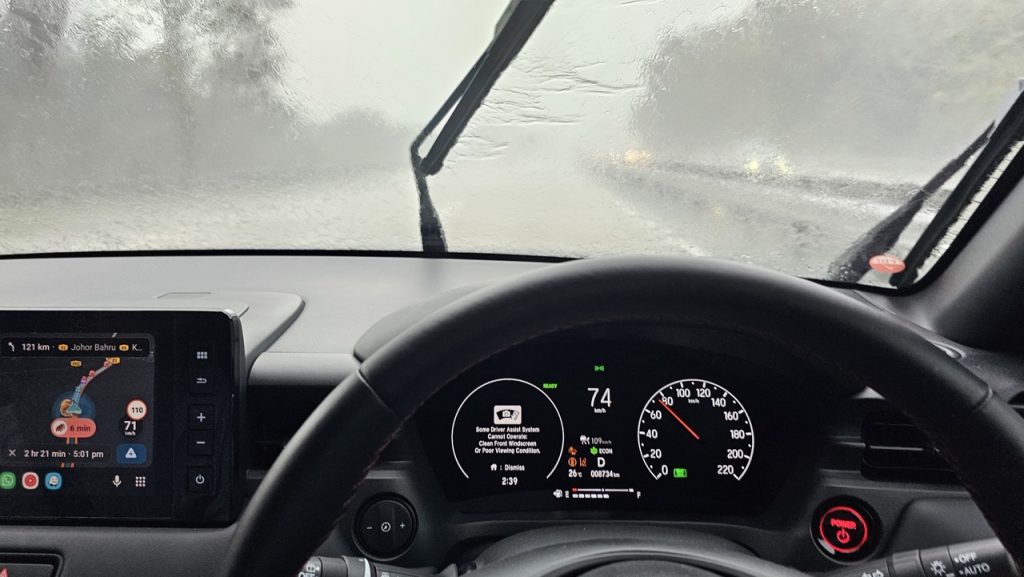
Driving Conditions: Cautious highway driving between 70-90 km/h, torrential rainstorm, moderate traffic.
Economy: 5.1 l/100 km (19.6 km/l)
Driving Notes:
- While already noticeable during the drive up to Ipoh, it became even more apparent on the return journey just how stable and secure the HR-V feels at highway speeds. And this proved especially reassuring once the heavens opened, as despite being front-wheel drive only, the SUV remained impressively composed even when ploughing through what occasionally felt like lakes at 80 km/h.
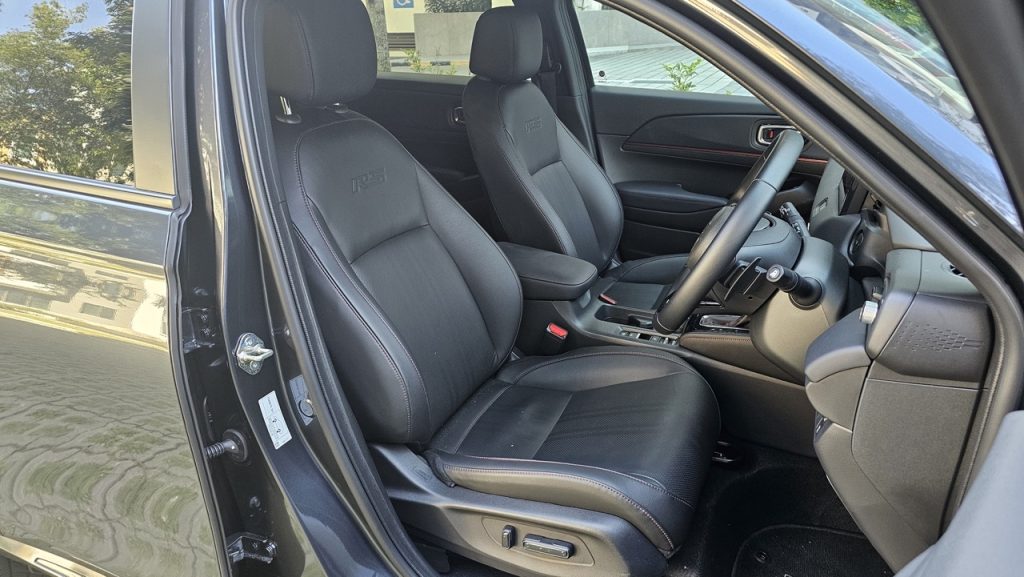
- What was unfortunately made more obvious during the longer drive back down south however was that the HR-V’s seat bases are a touch flat and firm, with roughly two hours behind the wheel being when flat-arse syndrome began to set in.
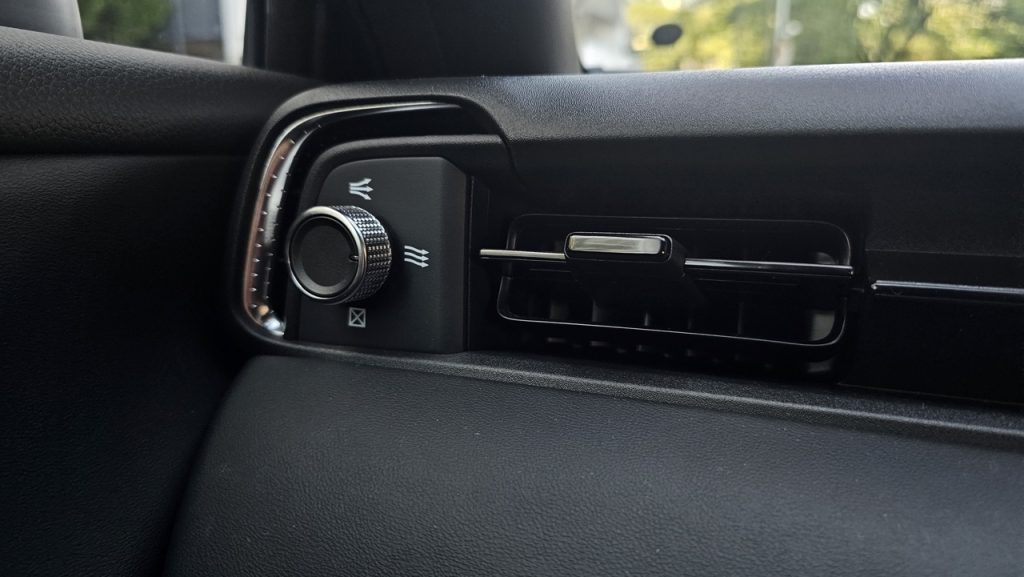
- One slightly random observation worth noting too is that the HR-V’s air-conditioning vent knobs are actually rather useful. Being able to redirect cool air away from oneself without completely shutting off the vents proved surprisingly appreciated after spending time under the blazing Ipoh sun, allowing the cabin to cool down without having icy air blasting directly onto a sweat-soaked skins.
- The slightly improved fuel economy on the drive back down to KL can likely be attributed to the slower cruising speeds brought about by the weather.
Trip Report 4: Around Klang Valley
Driving Conditions: Typical KL city driving — part relaxed, part frantic, and occasional higher speed highway cruising.
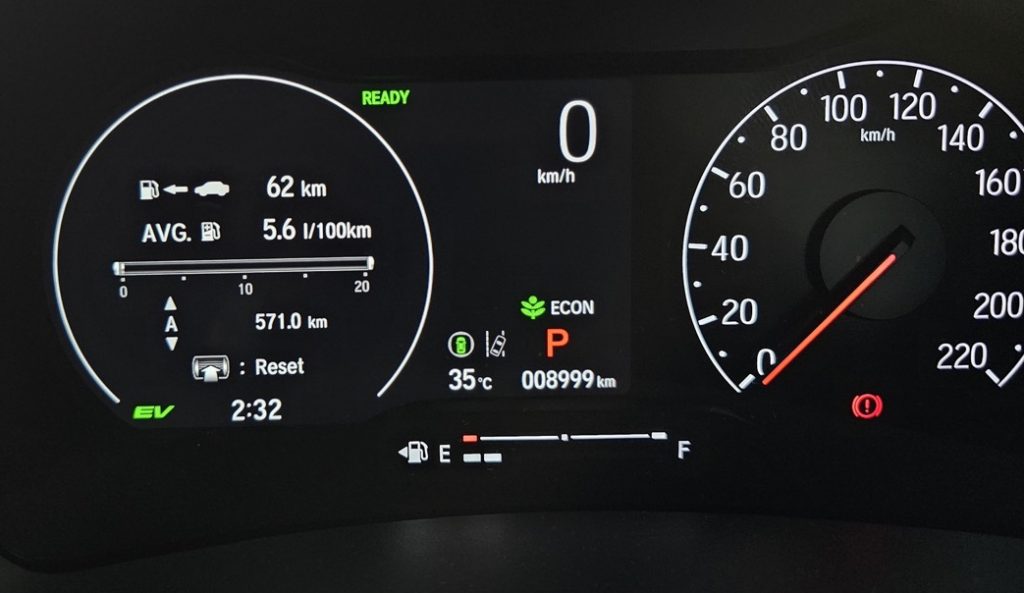
Economy: 5.6 l/100 km (17.9 km/l)
Driving Notes:
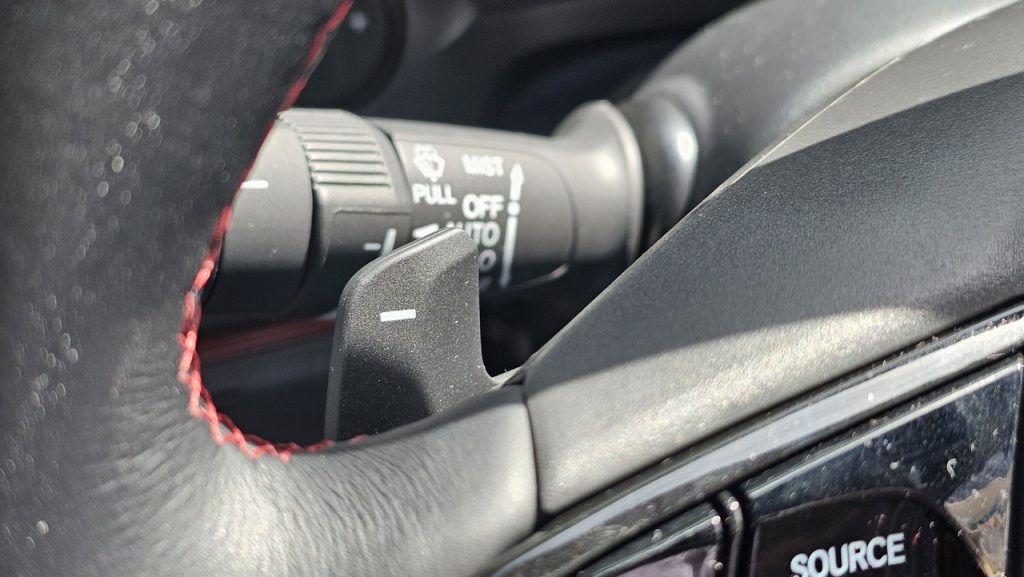
- The three levels of regenerative braking available through the paddles oddly gamify city driving somewhat, especially when trying to maximise energy recovery approaching traffic lights. While not a full substitute for the conventional brake pedal, it nevertheless adds a surprisingly interactive element to the daily commute.
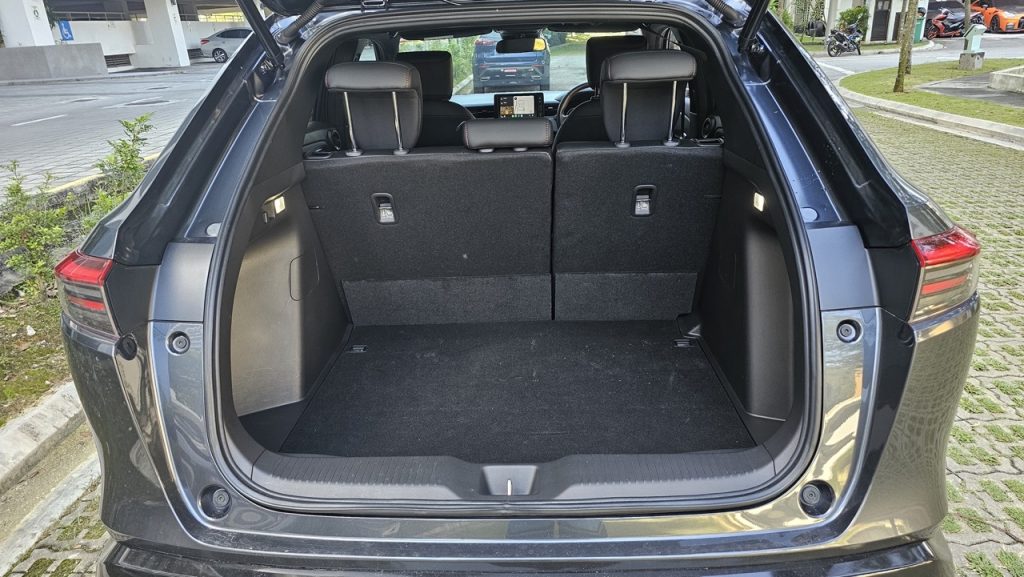
- While Honda’s usual packaging wizardry is perhaps not quite as apparent in the HR-V as it is in some of the brand’s other models, it remains reasonably spacious. It may not be one of those Hondas that somehow resembles a cathedral hidden within a shoebox, but three average-sized Asians can still sit in the back without complaint, while the boot is more than adequate for the weekly grocery run.
- And one thing only really noticed while spending extended time with the HR-V was just how many other HR-Vs there are on the road. Though honestly, it is not difficult to understand why. Like most Hondas, it simply does everything rather competently, which is perhaps exactly why so many people end up buying one.
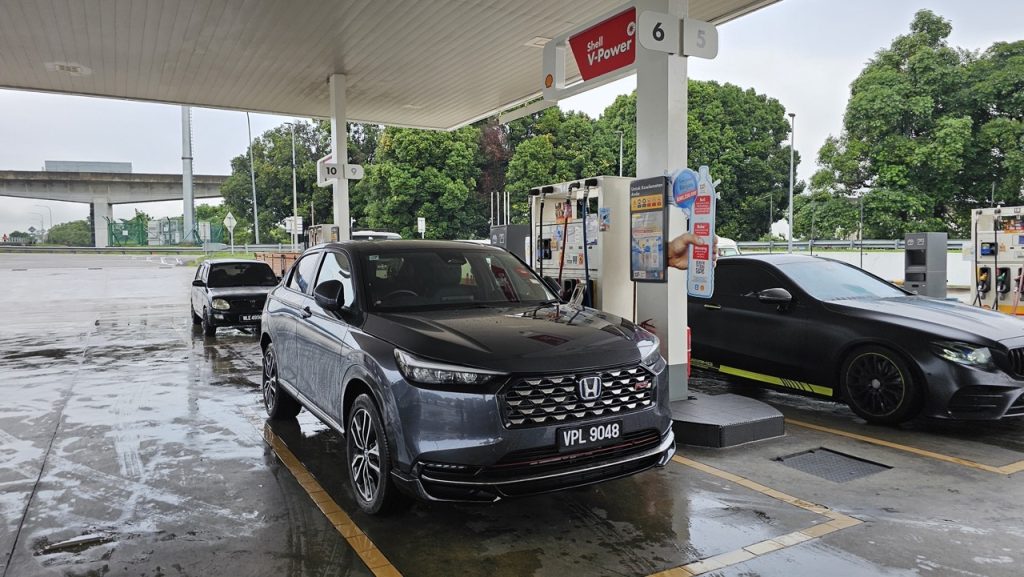
Conclusion: At The Filling Station
After covering a total of 571 km across a variety of driving conditions, the HR-V’s trip computer suggested that around 650 km from a full tank should be realistically achievable.
Now admittedly, this figure appears somewhat modest relative to the 1,000+ km claims currently being shouted about by the latest wave of Chinese PHEV SUVs. Though in fairness, the HR-V manages this while carrying only a 40-litre fuel tank, roughly 10 litres smaller than what is found in something like the Proton e.MAS 7 PHEV, and a whopping 20 litres smaller than the Tiggo 7 Pro PHEV.
It is also perhaps not entirely fair to directly compare a conventional HEV against a PHEV anyway, with the latter naturally offering greater EV capability thanks to their much larger batteries. It will however be interesting — especially for condo dwellers like this writer — to see how these PHEVs fare in the real world when they are unable to regularly top up from a wall socket.
In any case, around RM 80 worth of Budi95 for what would realistically be most people’s fortnightly fuel bill does not sound too bad at all. And considering too that the HR-V Hybrid commands only around RM 6,000 more than the top-spec petrol-only V variant, there remains a fairly compelling case for choosing the electrified option.
Honda HR-V 1.5L e:HEV RS Technical Specifications
Engine: 4 Cylinder, 16 Valve, DOHC i‑VTEC (Atkinson Cycle)
Capacity: 1,498 cc
Gearbox: Electric Continuous Variable Transmission (e‑CVT)
Max Engine Power: 107 PS @ 6,000 – 6,400 rpm
Max Motor Power: 131 PS @ 4,000 – 8,000 rpm
Max Engine Torque: 131 Nm @ 4,500 – 5,000 rpm
Max Motor Torque: 253 Nm @ 0 – 3,500 rpm
Top Speed: 170 km/h
0-100 km/h: 10.7 seconds
Price: RM 143,900