How To Maintain Control When Driving In Heavy Rain And Flooded Conditions

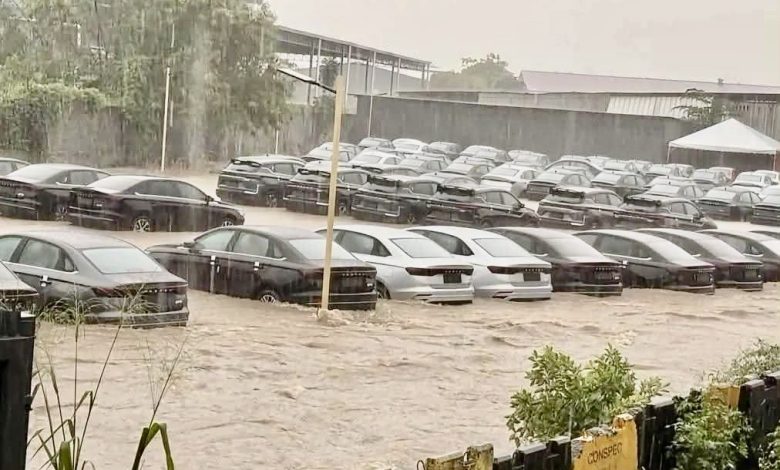
Heavy rain can create dangerous driving conditions on Malaysian highways. Sudden downpours may cause standing water to collect across lanes, increasing the risk of hydroplaning, also known as aquaplaning.
When a vehicle hydroplanes, its tyres lose contact with the road surface due to a layer of water. This reduces steering and braking control. Drivers can reduce the risk through proper tyre maintenance, lower speeds and appropriate handling techniques.
- Check Your Tyres Before Driving
Tyres are the vehicle’s main point of contact with the road. Their tread patterns help channel water away from the contact patch.
Drivers should check their tyre tread depth before travelling. The recommended minimum in the supplied guide is 3.0mm, although Malaysia’s legal minimum is 1.6mm.
Tyres with insufficient tread have less ability to disperse water. Drivers should also maintain the pressure specified by the vehicle manufacturer. Incorrect tyre pressure can affect tyre contact with the road and increase the risk of losing traction.
- Reduce Speed During Heavy Rain
Hydroplaning can occur at speeds as low as 50–60km/h when standing water is sufficiently deep. Drivers should therefore reduce their speed during heavy downpours.
The guide recommends reducing highway speeds by 20–30% when driving through areas prone to water accumulation. Sections of highways such as the PLUS, LDP and KESAS may require additional caution during severe rain.
Drivers can also follow the tyre tracks left by vehicles ahead. These tracks may contain less standing water because the preceding vehicle has already displaced some of it.
However, drivers should maintain a safe following distance. They should also avoid areas where water appears to be pooling, including sections near highway barriers and shoulders.
- Switch Off Cruise Control
Drivers should disengage cruise control when driving in heavy rain. This allows them to manage acceleration manually and respond more directly to changing road conditions.
If the tyres lose traction while cruise control remains active, the system may attempt to maintain the selected speed. This could increase power to the drive wheels and worsen a loss of traction.
- What To Do If Your Vehicle Hydroplanes
Hydroplaning can cause the steering to feel unusually light. Drivers may also notice the engine revving without a corresponding increase in speed or the rear of the vehicle beginning to slide.
If this happens, avoid sudden inputs.
First, ease off the accelerator smoothly. This allows the vehicle to slow down gradually.
Keep the steering wheel pointed in the intended direction of travel. Avoid sudden steering movements or aggressive corrections while the tyres have limited grip.
Do not slam on the brakes. Sudden braking while the tyres are not properly in contact with the road can make the vehicle harder to control.
Once the tyres regain contact with the road, drivers can gradually resume normal control.
Emergency Action Summary
| Situation | Recommended action | Avoid |
| Speed control | Ease off the accelerator smoothly | Slamming on the brakes |
| Steering | Keep the wheel steady and make small corrections | Sudden steering or swerving |
| Driver assistance | Disengage cruise control | Leaving cruise control active |
| Lane position | Avoid visible pooled water | Driving through deep standing water |
Drivers should remember that reducing speed and avoiding standing water are more effective than trying to recover after losing traction. If rainfall becomes too heavy or road conditions become unsafe, find a safe place to stop and wait for conditions to improve.