
Geely Holding Group Chairman Eric Li has warned that battery replacement costs could become a major issue as China’s electric vehicle fleet ages.
The concern centres on the different lifespans of EV batteries and vehicles. Battery degradation can make older vehicles expensive to maintain, even when their other components remain usable.
Speaking alongside Nio founder and CEO William Li at the 2026 World Internet Conference in Wuzhen on November 5, Eric Li said the problem has yet to emerge on a large scale. China’s EV market is still relatively young, but the issue could become more significant as vehicles age.
Battery lifespan and repair costs
William Li raised the issue from a 15-year vehicle lifecycle perspective. He questioned what happens when a car reaches 10 years or 200,000 km but still has five or six years of potential use remaining.
China’s existing warranty policy requires manufacturers supplying subsidy-eligible passenger vehicles to provide at least eight years or 120,000 km of coverage for traction batteries and other key components. The requirement applies to vehicles covered by the central subsidy programme for 2016–2020.
China also introduced battery durability benchmarks under recommended national standard GB/T 46991.1-2025, which took effect on July 1, 2026.
For M1 and M2 vehicles, the standard requires minimum State of Available Energy retention of 82% after five years or 100,000 km. The threshold falls to 75% after eight years or 160,000 km, and 70% after 10 years or 200,000 km.
Separate thresholds apply to battery electric vehicles with certified ranges of 220 km or less. These vehicles have minimum retention requirements of 80%, 72% and 67% at the respective intervals.
The standard also limits the deviation between displayed and measured battery health to 5%. However, these durability benchmarks do not extend the existing eight-year warranty requirement.
The issue is also affecting used-EV values in China. A report by Rest of World, citing International Energy Agency data, found that around four out of five surveyed used-car dealers refused fully electric vehicles older than five years.
China Automobile Dealers Association figures cited in the report showed that a three-year-old EV retained around 45% of its original value. This was down from nearly 55% in 2023.
Battery repairs can also remain expensive. Yicai cited an engineer at CATL’s Ning Service Shanghai centre as estimating a typical full pack replacement at around 100,000 yuan (approximately RM58,000).
Repairs through the service reportedly cost between 10,000 and 20,000 yuan (approximately RM5,800–RM11,600). These figures apply to that operation and are not universal prices across manufacturers.
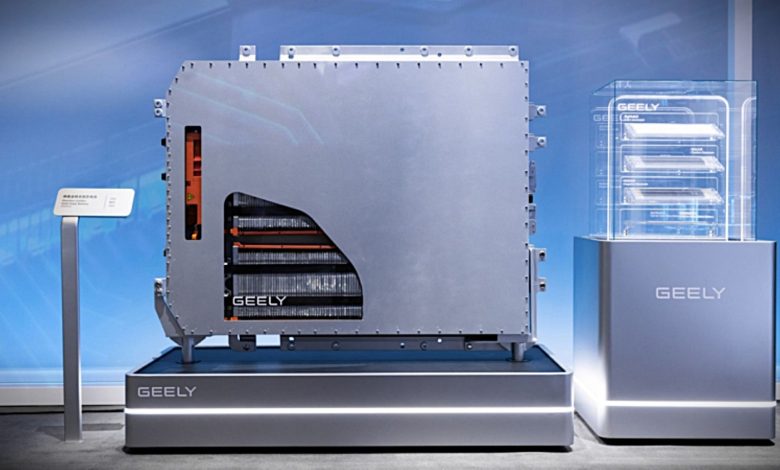
Battery construction can also affect repair costs. Cell-to-Pack designs integrate cells directly into the battery pack, reducing conventional module structures but potentially complicating disassembly and individual cell replacement.
Geely and Nio expand battery swapping
Geely and Nio are expanding their cooperation through battery swapping, which allows compatible vehicles to exchange depleted battery packs.
Under an agreement announced on September 28, Geely will contribute its Yiyi Power business and 640 million yuan (approximately RM371 million) in cash. In return, it will receive a 30% stake in Nio Power, subject to regulatory clearances and completion of the transaction.
Yiyi Power’s commercial swapping operations will be integrated into Nio Power. Geely will develop compatible passenger vehicles, while Nio Power will provide battery-swapping services.
Nio reported 4,126 battery-swap stations and 5,307 charging stations in China as of September 27, 2026. Its swapping network had completed more than 125 million battery exchanges.
Nio China will retain a 63.6% controlling stake in Nio Power, while an existing investor holds 6.4%. Geely’s stake could fall to at least 20% if agreed performance milestones are not met.
Geely also has an option to invest another 640 million yuan, potentially increasing its stake to 34%. Separately, Nio will acquire a 10% stake in Geely’s Haohan Energy.
The agreement does not identify the first compatible Geely models or provide a detailed rollout schedule. Nio has set a target of operating 10,000 swapping stations by 2030.
Compatibility remains a challenge
Battery swapping requires compatibility across battery dimensions, electrical connections, cooling systems, locking mechanisms and vehicle communication systems.
The network also needs sufficient compatible vehicles and battery inventory to justify station investment and operating costs.
Battery swapping is separate from Battery-as-a-Service, which separates battery ownership from vehicle ownership. Under Nio’s BaaS model, Wuhan Weineng Battery Asset Co owns the battery while customers pay a subscription.
Eric Li’s warning highlights a longer-term challenge for EV manufacturers. Battery replacement costs could affect the economic lifespan of vehicles that remain mechanically usable.
The industry must therefore consider how to repair, replace or manage ageing batteries without making older EVs uneconomical to maintain.